RETROSPECT
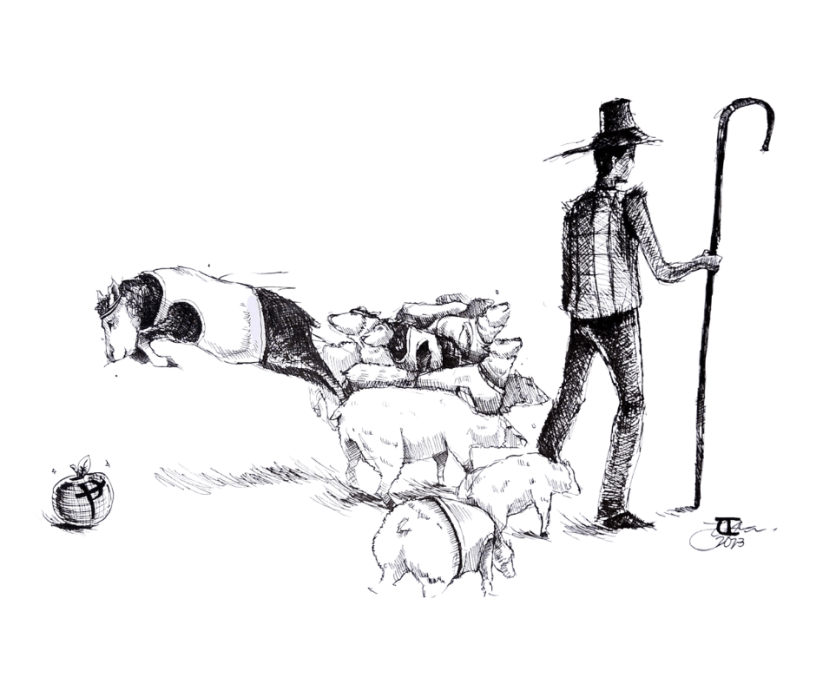
A working man without his pay is like a sheep following the wrong shepherd. The sheep is among the herd, but is immediately noticed for its different color. When neglected, it will look for greener pastures and travel distant lands to find a group it belongs to.
From there, the sheep will finally stand out along with its companions. Similarly, the working man will be successful and triumphant on his endeavor after capturing the desires of the common people: a stable job with a fair wage and a good life. If the working man works for himself, then he is no longer a worker. He is now a shepherd of his self.
Money plays an important role in the sports spectrum. The industry revolves around it. Without the presence of the big guns, it will not perform its function well into accord. Currency also makes the games more valuable and play-worthy. Let’s take the National Basketball Association (NBA) for example. The American league brings in money and contributes to the economy of the states.
The same thing happens in the Filipino arena, but less wrenching. It is a business but only this time, the businessmen are not the players or athletes. The hub is controlled by the franchise bourgeoise, team owners, and promoters. The only synthesis dividing them from the proletariat is us, the spectators.
Sports in the Philippines is highly romanticized by most as it brings an impression to the public eye that it is just an easy play, like a bird of prey. It is also a form of entertainment for us and is just as significant as the food we devour to sustain life, but we take it for granted.
Behind the fences are the sprinters who step on stones; beyond the court are the basketball standouts who want to aim for the sky as they slam a dunk. And they do all of these to bring glory to the motherland with their golden lanyard and trophies.
Just recently, the Tuguegarao City Athletic Association (TCAA) Meet was concluded. Everything seemed to be smooth-sailing with all eyes to the Cagayan Valley Regional Athletic Association (CAVRAA) Meet. Until, a social media post called out the Department of Education – Division of Tuguegarao City for the late distribution of cash allowance of athletes.
DepEd Tuguegarao issued a statement on Facebook writing: “the submission of the payroll to the LGU by the Division Office was late due to unavoidable circumstances which eventually caused the delay.” The local government supported 3,808 athletes with cash allowance during the meet. This goes to show that the hard work rooting with sweat and sacrifice also needs to be rewarded not only with medals and awards, but for their monetary value too.
The allowance will eventually pay for the equipment, food, accommodation, vehicle fair, and other necessities of the student-athletes and their coaches. In the case of Ernest John “EJ” Obiena’s withdrawal from the Asian Indoor Athletics Championships, the renowned blue bill is also evident.
Financial conflict was a big factor along with troubles concerned on bringing his poles to Kazakhstan. Obiena is and always will be, a Filipino pride, bagging straight golds in international stints making him the white sheep.
Nevertheless, the reason the sheep left the herd is not because its pasture has no grass or weed to graze upon. It is due to the land being open and the sheep sighting a better apple. If EJ Obiena is a white sheep, then our black sheep, the one that got away (TOTGA), is Rhenz Joseph Mamuyac Abando, a University of Santo Tomas basketball star before transferring to Colegio de San Juan de Letran where he became the NCAA Season 97 Rookie of the Year and Most Valuable Player on 2022.
Abando was later recruited to step on the court for Gilas Pilipinas, but barely played. In the same year, he shirted with Anyang Korean Ginseng Corporation (KGC) in the Korean Basketball League (KBL). His contract will earn him 237 million won or almost 14 million pesos in his first year. Significantly more than PBA rookies who only get 200 thousand pesos per month or 2.4 million pesos in their first year.
The La Union native, born March 11, 1998, is a candidate for Defensive Player of the Year in the KBL. Abando is no longer warming benches for the national team. The 6-foot-2” standout is now slamming dunks and smashing backboards in Korea, refusing to become a loss as he is one of the greatest young talents in the Philippine soil. Earlier this year, Abando led Anyang KGC to victory in the East Asia Super League (EASL) Champions Week.
Rhenz Abando is just a peck in the long line of Filipino athletes who “got away”. Another lost sheep is Wesley So, Filipino-American chess grandmaster, three-time US Chess Champion, and three-time Philippine Chess Champion. So currently ranks 8th worldwide in the FIDE International Chess Federation with a March 2017 Elo rating of 2822.
He won the Philippines’ first gold in the Summer Universiade but was deprived of the incentives usually awarded to Filipino athletes. “You are not held back by your color, lack of connections or the amount of money you have,” So quoted.
Professional players, even student-athletes who are the next generation of champions, serve as the building blocks of sports. The Philippines is not low on finances, it’s on how we handle and who handles the money. Whether we like or not, there is sleaze in all pieces of the puzzle and let’s face it, money does buy you happiness, but only for a limited time. It’s on sale – if that even makes sense.
The spectacle needs the power to change the status quo. Spectators make the cut. After all, money doesn’t fall from trees and earning cash is not easy unlike counting sheep before bed. It is high time we close the line of Filipino TOTGAs and gatekeep the sports powerhouses we produce, because they are all we have.
Editorial Cartoon by: Christian Jelo Asuncion. Posted with permission from the cartoonist.
 Archpoint Media